We may earn a commission from purchases through links in this article, at no extra cost to you. How we earn
Installing a Level 2 home charging station is one of the most practical upgrades for an electric vehicle owner, cutting recharge times significantly compared to standard household wall outlets. In direct-import marketplaces, the most common entry point for residential Level 2 charging is a 32-amp, 7-kilowatt single-phase unit paired with a 5-meter cable. However, navigating these listings requires distinguishing seller-provided marketing titles from the electrical realities of continuous high-amperage residential circuits.
This guide compares marketplace listings and supplied specifications without physical testing; no hands-on testing was performed on any of the electrical hardware or accessories reviewed below. Instead, this evaluation examines published listing parameters, advertised electrical specifications, practical household compatibility considerations, and the safety boundaries that vehicle owners must verify with a qualified electrician prior to mounting hardware on a garage wall.
Key Decision Factors Before Purchasing Budget Charging Gear
Before selecting hardware, buyers should understand how 32A charging interacts with home electrical infrastructure and vehicle connectors:
- Dedicated Continuous Load: Continuous EV charging is treated under standard electrical codes as a continuous load. Drawing 32A continuously requires a dedicated branch circuit rated appropriately higher than the operating current to prevent breaker tripping and thermal strain. Exact breaker sizing and wire gauge must always be determined by local electrical codes and a licensed electrician, not inferred from generic product listings.
- Dedicated Plug vs. Hardwired Installation: Direct-import wallboxes may arrive with specific regional plugs, bare wire leads, or proprietary connections. Ensure the physical input interface matches your installed receptacle or subpanel before ordering.
- Connector Standards: Units may feature cables terminated with specific connectors, while others require adapters or differ by region. Never assume universal vehicle compatibility without confirming your vehicle's charge port inlet and the connector attached to the station.
- Listing Evidence Boundaries: Inexpensive import hardware frequently lists peak amperage and theoretical ratings without independent third-party certification reports (such as UL, ETL, or TÜV) included in the product text. These specifications should be treated as seller claims until corroborated by physical labeling and verified by your installer.
Primary 7kW Home Charging Stations Compared
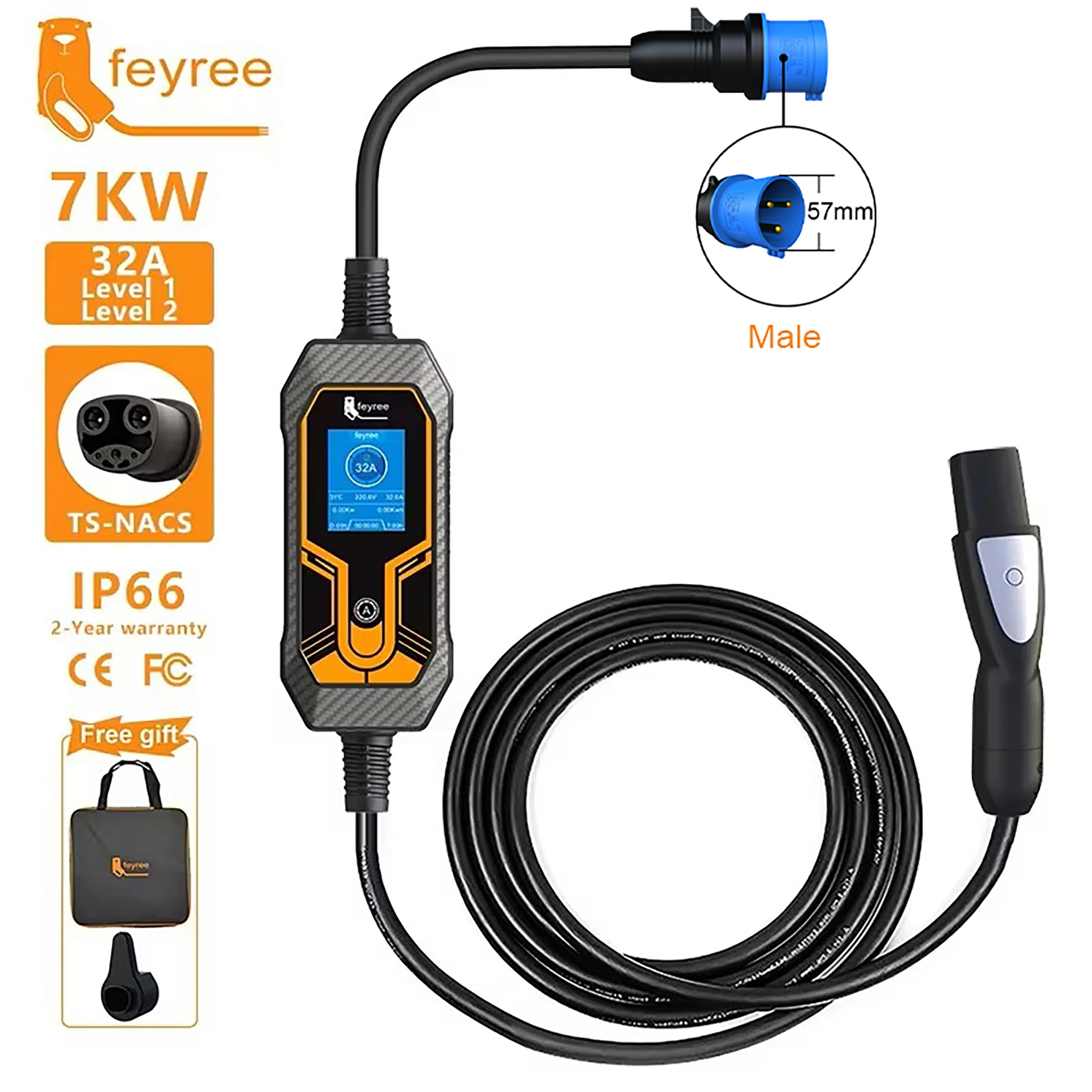
1. Feyree 7kW 32A Level 2 Charger (Tesla-Dedicated Cable)
The Feyree 7kW 32A Level 2 unit is marketed for Tesla vehicles (Models 3, Y, S, and X). Its listing title claims an integrated 5-meter cable with a Tesla-compatible connector and an adjustable current feature, intended to allow users to select a lower charging amperage if electrical supply conditions require it.
Who it suits: This unit is aimed at Tesla owners seeking a direct Level 2 charging setup without an external adapter, provided the seller's claim of native vehicle compatibility is accurate. The advertised adjustable current feature may appeal to buyers who need the flexibility to set a lower charging rate on constrained electrical panels.
Practical questions to verify on the listing: Because the seller provides no product description, buyers should confirm key technical details with the seller before purchasing:
- What specific wall-side input plug or wiring lead is supplied on the unit?
- What exact current steps can be selected, and how is the adjustment configured?
- What enclosure ingress protection (IP rating) and independent electrical safety certifications (such as UL or TÜV) are documented?
- Does the unit include internal ground-fault or residual current protection?
2. Generic 7kW 32A RFID/Direct-Start Wallbox
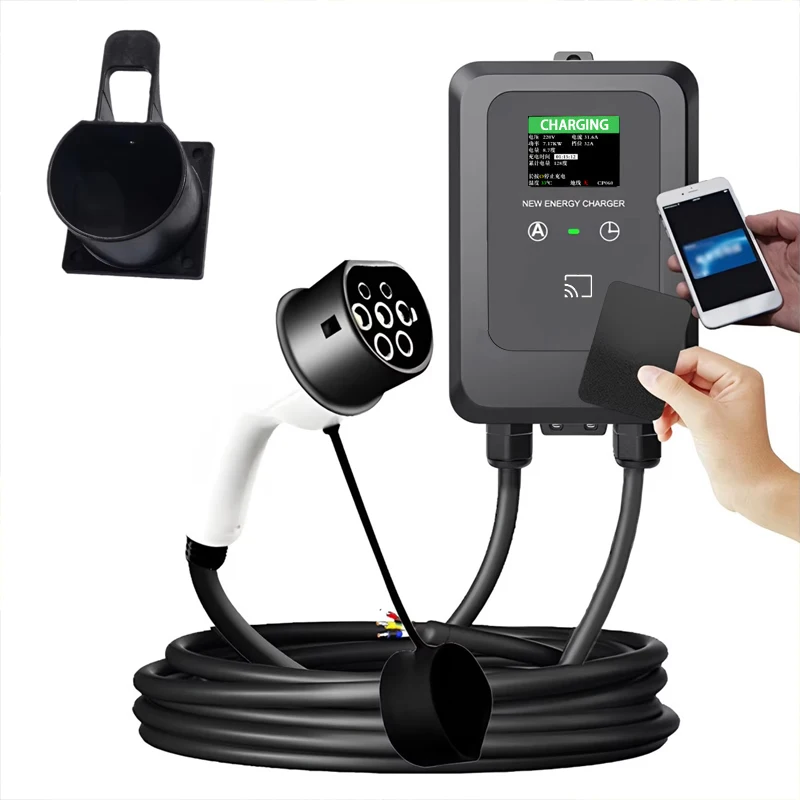
The second primary option is a 7kW 32A wallbox listing advertising a 5-meter cable and dual operating modes: RFID card access or immediate "charge now" activation. Priced at approximately $134.43, it represents a budget-tier charging station listing.
Who it suits: This format is typically considered for shared parking spaces, carports, or semi-accessible driveways where an RFID card function can provide access control against unauthorized charging.
Practical questions to verify on the listing: The listing provides no technical description, leaving critical installation and compatibility variables unstated. Buyers should verify:
- What vehicle connector standard (e.g., J1772, Type 2, or proprietary) is fitted to the 5-meter cable?
- Is the station designed for a hardwired subpanel connection or does it come with a specific wall plug?
- What is the enclosure's verified ingress protection (IP) rating for water and dust resistance if installed outdoors?
- What residual current detection or internal protective circuitry is integrated into the unit?
Garage Cable Management: Retractor Swivel Hardware
A Level 2 installation also involves keeping cables manageable. A standard 5-meter charging cable can present a potential trip hazard and can be subject to abrasion or dirt when resting on garage floors.
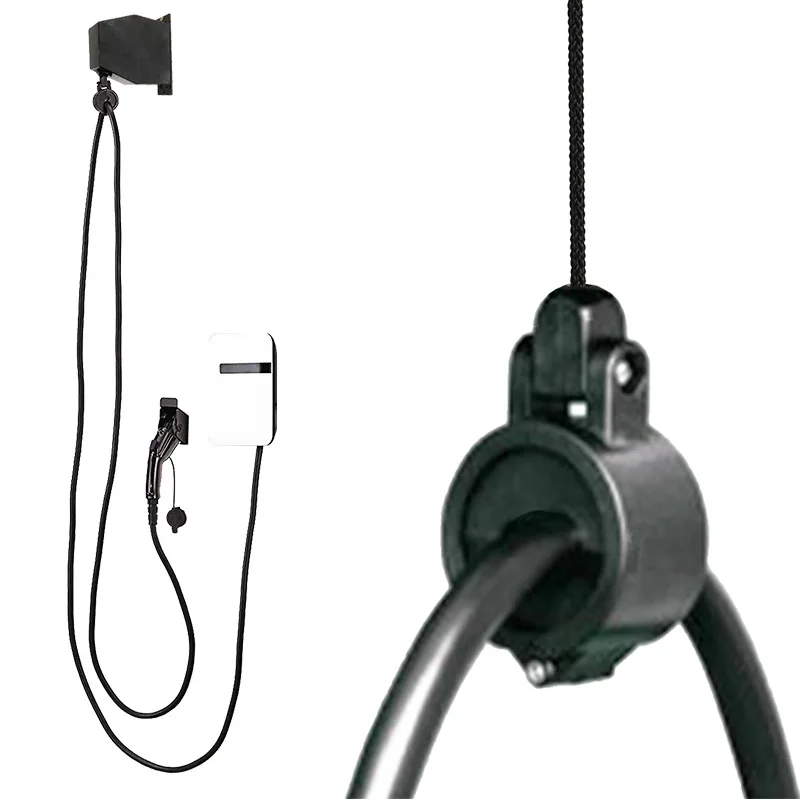
Black Nylon Clamshell Retractor Clamp (15mm / 0.59" OD)
This supporting accessory listing describes a black nylon clamshell clamp designed to hold an EV charging hose or cable for overhead tethering, with an advertised fit for outer diameters of 0.59 inches (15mm).
Who it suits: EV owners planning an overhead retractor or ceiling-suspended lanyard system to keep their charging cable off the floor and away from vehicle tires.
Practical questions to verify on the listing: With no product description provided, buyers should check the mechanical specifications before ordering:
- Does your specific charger cable have an outer diameter matching the claimed 15mm (0.59") sizing, as thicker 32A shielded cables may not fit?
- What hardware attachment points or swivel connections are included, given that the balancer reel, tether line, and ceiling mounting brackets must be sourced separately?
Pre-Installation Checklist and Reality Checks
When assembling a home charging setup from marketplace components, keep these procedural boundaries in mind:
- Verify Cable Diameter First: If you intend to use an overhead swivel clamp, measure the true outer diameter of your charger's cable before purchasing mounting hardware to avoid improper fit or cable pinching.
- Inspect Physical Markings Upon Arrival: Direct-import hardware should carry legible stamped labels detailing working voltage, operating current, ingress protection (IP) codes, and compliance marks. If the physical unit arrives without clear technical rating plates, do not proceed with installation.
- Have a Licensed Electrician Assess Panel Headroom: Never attempt to connect a continuous-duty charging circuit without a formal electrical load calculation of your home panel. Older residential service panels may require load management or a service upgrade to safely accommodate an additional 7kW draw alongside existing major household loads.